

Revenue Cycle Management (RCM)
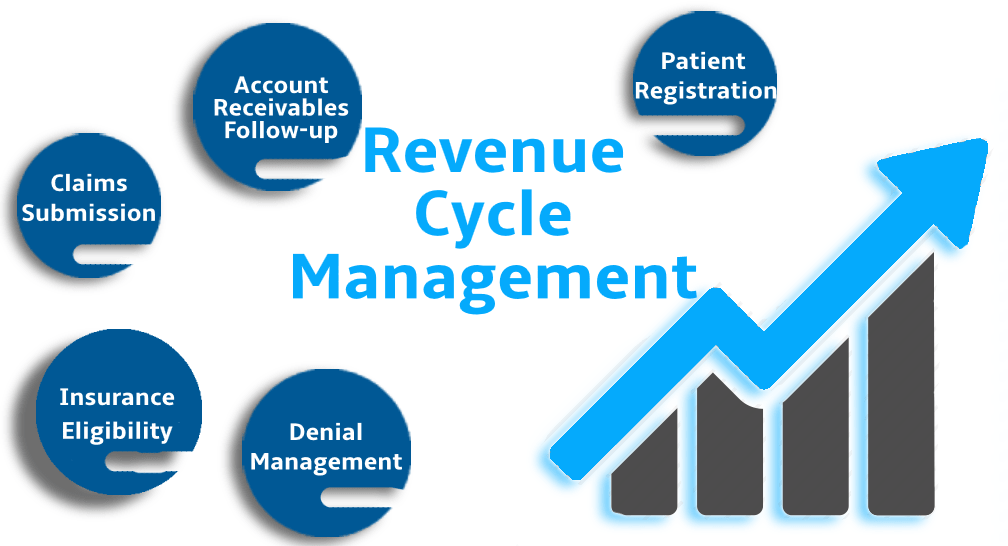
Revenue Cycle Management (RCM) in medical billing refers to the process that healthcare organizations use to manage the financial aspects of patient care, from the initial point of contact to the final payment. The goal of RCM is to optimize the revenue cycle by streamlining the processes involved, ensuring maximum reimbursement, and minimizing delays in payments. RCM is essential for maintaining a healthcare practice’s financial health and overall efficiency.
Benefits of RCM Services in Medical Billing:
- Improved Cash Flow: Efficient RCM processes lead to faster payment cycles and reduced claim denials, resulting in better cash flow for healthcare providers.
- Reduced Administrative Costs: Outsourcing RCM can help reduce the need for in-house billing staff, lower overhead costs, and minimize errors.
- Increased Claim Accuracy: By implementing standardized procedures and leveraging technology, RCM ensures that claims are submitted correctly, reducing the likelihood of rejections and denials.
4. Compliance with Regulations: Healthcare billing is subject to frequent changes in regulations (e.g., HIPAA, CMS guidelines). RCM services ensure that practices remain compliant with industry standards and avoid penalties.
5. Enhanced Focus on Patient Care: Providers can focus more on delivering quality healthcare services while RCM companies manage the administrative burden of billing, coding, and payments.
6. Better Financial Management: With RCM, healthcare organizations can track their revenue cycle in real-time and make informed decisions to improve financial health, such as identifying inefficiencies or opportunities for growth.